Morea Turks suffered a great massacre 200 years ago. About 40 thousand people were brutally killed by the Greeks. The black mark of Greece is the Peloponnese Massacre in historical documents.
Even if it is wanted to be forgotten, history does not forget…
Exactly 200 years ago, nearly 40 thousand Mora Turks were massacred by the Greeks.
Istanbul University History Department Lecturer Prof. Dr. Ali Fuat Örenç has been tracking this issue for years, collecting information and documents. Örenç shared his research on the genocide suffered by the Mora Turks with TRT News.
Morea Turks who were detached from their homeland
The Peloponnese is the southernmost tip of present-day Greece…
It is in a perfect position to dominate the Aegean, the Ionian Sea, the Adriatic and even the Mediterranean. For this reason, it has had strategic importance throughout history.
Before the Turkish conquest, Byzantine despots continued to dominate the Peloponnese. Fatih Sultan Mehmet, who took Istanbul and erased Byzantium from the stage of history, added Morea to the Ottoman lands in 1460. Like everywhere else captured, Mora was also flooded by Muslim families. Families settled in Mora, made the region their homeland and developed it.
During the period of Turkish rule, no one was treated according to their religion, nationality or race. Thousands of foundation works have been created that serve everyone without discrimination. Unfortunately, very few of these works have survived today. Because they were the traces of Turks who wanted to be erased, they were destroyed, burned, destroyed.
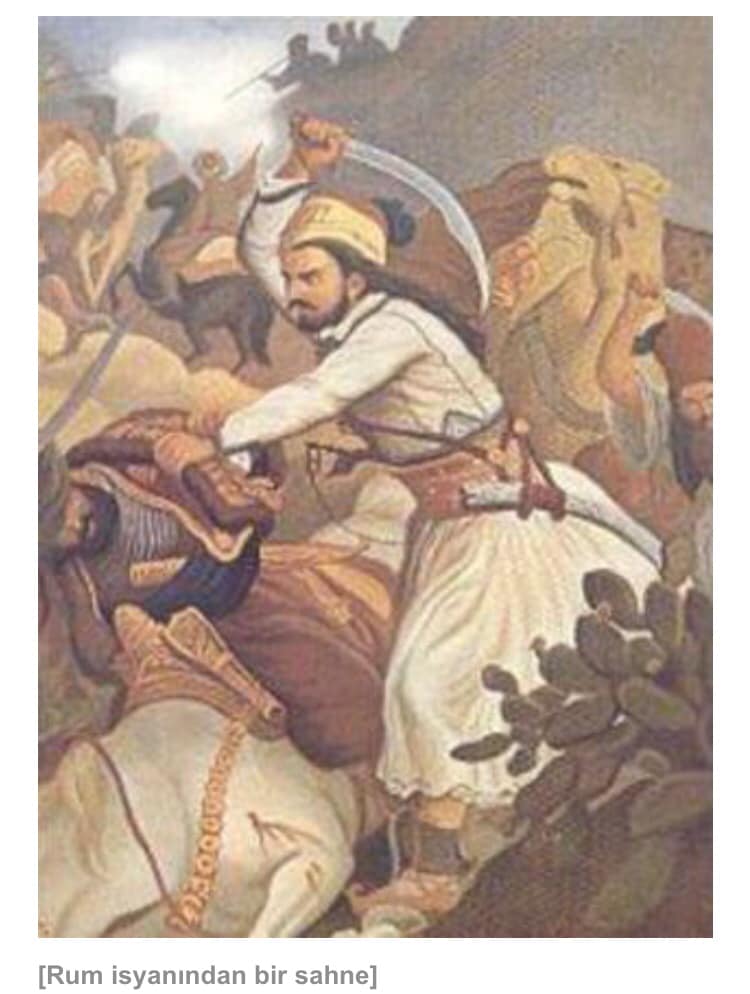
First revolt: February 22, 1821
In 1821, an independent Greece from the Ottoman Empire was established at the end of great suffering and massacres.
The biggest victim of the Greek independence process was the Peloponnese Turks who made this land their homeland for 361 years and lived here for generations. The Turks were subjected to massacres that were rarely seen in that period. As the Europeans admitted, the rebellion of 1821 soon became a brutal war of religion and race.
When the revolt began, it is estimated that over 90,000 Muslims lived in the Peloponnese. When independence was declared, there was no trace of this population. Most of them were massacred during the riots. The survivors, on the other hand, had to leave their homes, lands, memories, tombs of their ancestors, in short, their homeland, where they had lived for generations, and migrate from the Peloponnese.
How did the rebellion begin?
Before the 1821 revolt began, Turks, Greeks and Jews lived together in the Peloponnese. They were side by side, they were neighbors. They were planting together and shopping from each other. No one had predicted that one day his neighbor would knock on his door to kill him. For this reason, Muslims who were attacked or under siege did not expect such a thing to happen to them, they were unprepared.
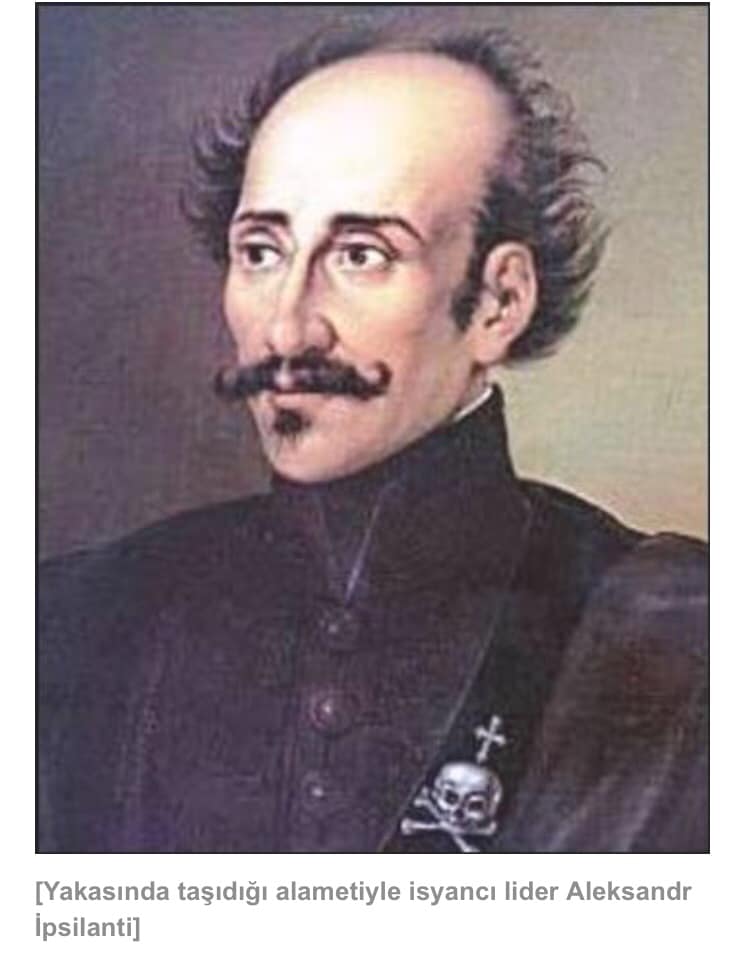
The first rebellion started in Wallachia-Moldova, which is now within the borders of Romania and was under Greek rule at that time. The Ottoman Empire suppressed this rebellion attempt, which could not find enough support from the outside and the local people.
A significant part of the dispersed rebels managed to pass to Morea. The environment here was very conducive to organization.
According to eyewitnesses, hunger and death became a natural part of daily life in the Peloponnese during the 1821 revolt. Not only the Turks but also the Jews in the region were affected by this brutal massacre.
prof. Dr. Ali Fuat Örenç talks about the rebellion process as follows:
“The Christian Kleft groups, living in the Pindus and Olympus mountain regions of the Peloponnese and having limited acquaintance with the central authority, had a very important influence in the rebellion. Greek rebels began to loot all Muslim villages without discrimination and massacre the Turks. Word of mouth was circulating that there would be no Turk left in the Peloponnese and in the world, and songs were sung announcing the beginning of a war of extermination.”

40 thousand Turks were massacred in the Peloponnese
When the news of the first massacre in Peloponnese was heard, the Muslims of Mezistre, Landor, Fenar, and Badrine took shelter in Tripolice, the people of Arcadia and Andurusa took shelter in Koron, Moton and Navarin, and the people of Gastun took shelter in Lala Castle. Vostice Muslims were deceived by the Greeks here and brought to the pier to be transported to Salona Town by boats. However, the Greek rebels did not keep their promise and killed about 400 of the Turks.
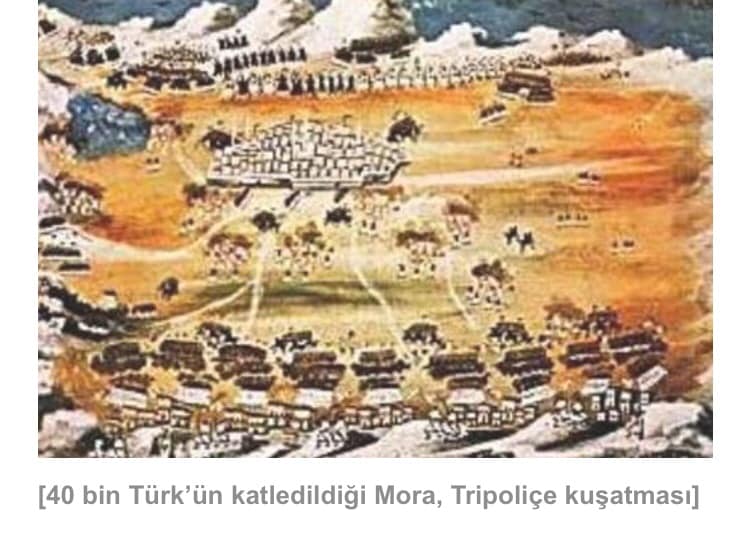
prof. Dr. Ali Fuat Örenç talks about the massacres against the Mora Turks:
“The city of Tripolice, which is on the verge of one of the biggest massacres in history, was besieged by 50-60 thousand Greeks for 5 months without interruption. The Greek rebels carried out one of the biggest massacres that took place during the Greek revolt in Tripolice. Almost all of the nearly 40 thousand Turks were brutally killed in 3 days. 97 people, including the commanders and their families, were taken hostage here. The Greeks, full of hatred, even dug up the Turkish cemetery and burned the bones. He also murdered his judge, Halim Efendi, by pouring oil on him and burning him.”
Mora from the pen of witnesses and writers…
Foreign source works on the murders and massacres committed against Turks in Morea began to be destroyed one by one from the libraries of America, France, Germany and England in the following years. One of those works is Death and Exile by the American writer McCarthy.
In his book, McCarthy especially emphasized that the Greeks in the Peloponnese were in a general policy of annihilation against the Muslims, and he uttered the nationalist slogan of the uprising from the mouth of Germanos, Bishop of Balyabadra; “Peace to the Christians! Respect the consuls! Death to the Turks!” states that his discourse represents.
What a German officer named Kotsch, one of the European volunteers in the city, told:
“A Greek priest who was thought to have relations with the Turks was killed by torture. A Jew trying to escape from the city was stripped completely and his organs were cut off; then he was hanged after being walked around the city. Those who were not killed were transferred to Kuşadası and İzmir by 10-15 Greek bandit boats. Some of these immigrants started to die as soon as they ate food, as they starved for a long time when they came to Anatolia.”
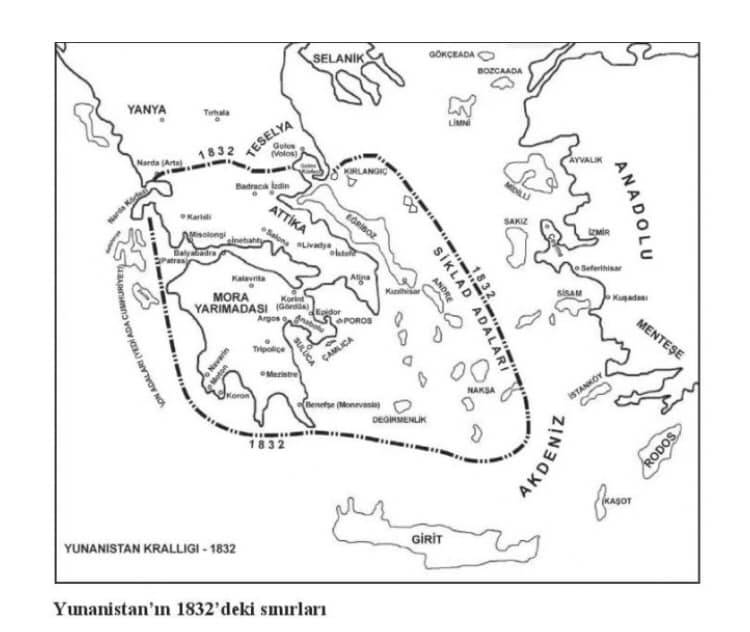
“Greece sent incomplete reports to Europe”
David Howarth, who has a work on the Greek revolt and its aftermath, writes about what was done to the Turks in Peloponnese with exemplary sentences. Howarth watched the revolution of 1821 on the spot and prepared his work by examining the books, articles and diaries written by British, Italian, French, German officers and journalists after they returned to their countries.
Of the shocking information Howarth gave in his work, only the following lines suffice to describe the brutality:
“As many as 20 Europeans witnessed the barbarism of the Greeks. One of them was Colonel Thomas Gordon from Scotland. The events he saw in Tripolice were so terrifying that he wanted these shameful events to be known forever: Within two days, in the city where tens of thousands of Turks lived, not a single living being was left. Most of them were killed with their heads, arms and legs cut off. During the revolution of 1821, the number of foreigners living in Greece was incalculable. Therefore, European countries did not know what was going on in Greece. Reports sent outside of Greece did not participate in the war, “Because it was prepared by the enlightened romantics living in Athens, it was written in accordance with the ideals of the Greeks. While these Europeans condemned the Turks, they did not know that it was the Greeks who barbarized and started the massacre.”
“They were killed deliberately and without remorse”
Famous English writer William St. Clair describes the Greek massacres in Morea with these striking sentences:
“They were destroyed without the world knowing. Over 20,000 Turkish men, women and children were slaughtered by their Greek neighbors during several weeks of slaughter. They were killed deliberately and without any pangs of conscience.”
Notes from the pen of Lütfi Efendi, one of the witnesses:
“With the uprising of the Greeks, the Turks, who made Morea their homeland for about four centuries, were subjected to very severe attacks by the rebels. As it is understood from the observations of some European authors who joined the rebellion to support the Greeks but were startled by the brutality they saw, these brutal murders of the Greeks had the characteristics of genocide.
Why was the revolt not suppressed?
The rebellion, which started in 1821, continued for about 10 years. Great European powers of the period, England, France and Russia, made diplomatic and military interventions in favor of the rebellious Greeks. Europeans openly supported the rebels. This made it impossible for the Ottoman Empire to suppress the rebellion.
prof. Dr. Ali Fuat Örenç explains that the independence of Greece cannot be without Europe, with the following sentences:
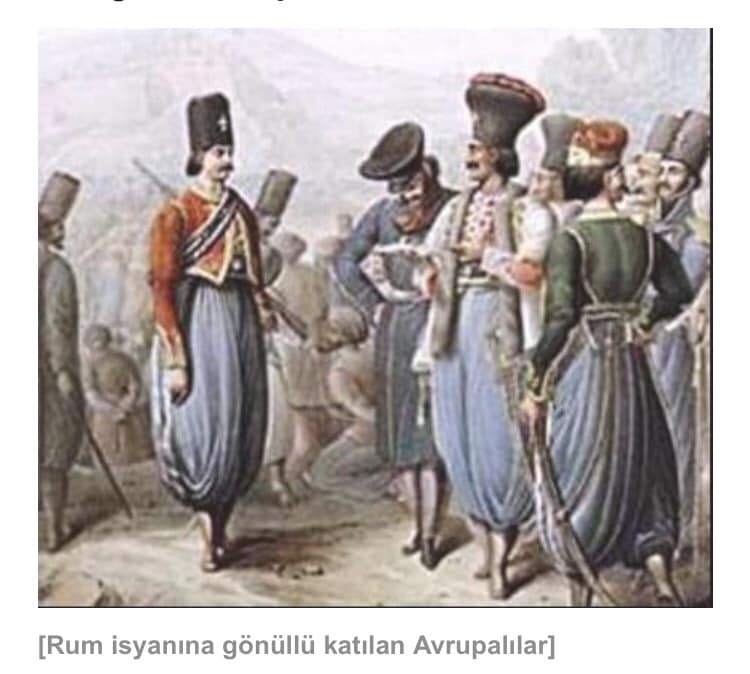
“The thesis was accepted that the cultural and secular roots of the civilization they had in Europe originated from Ancient Greece. Officers and people of all ranks were written voluntarily. Committees established in many parts of Europe, especially in England, collect money, volunteer groups that actually participated in the revolt in Mora’ Money and ammunition aid were collected in big cities like New York, and they were sent to the riot zone with volunteers.”
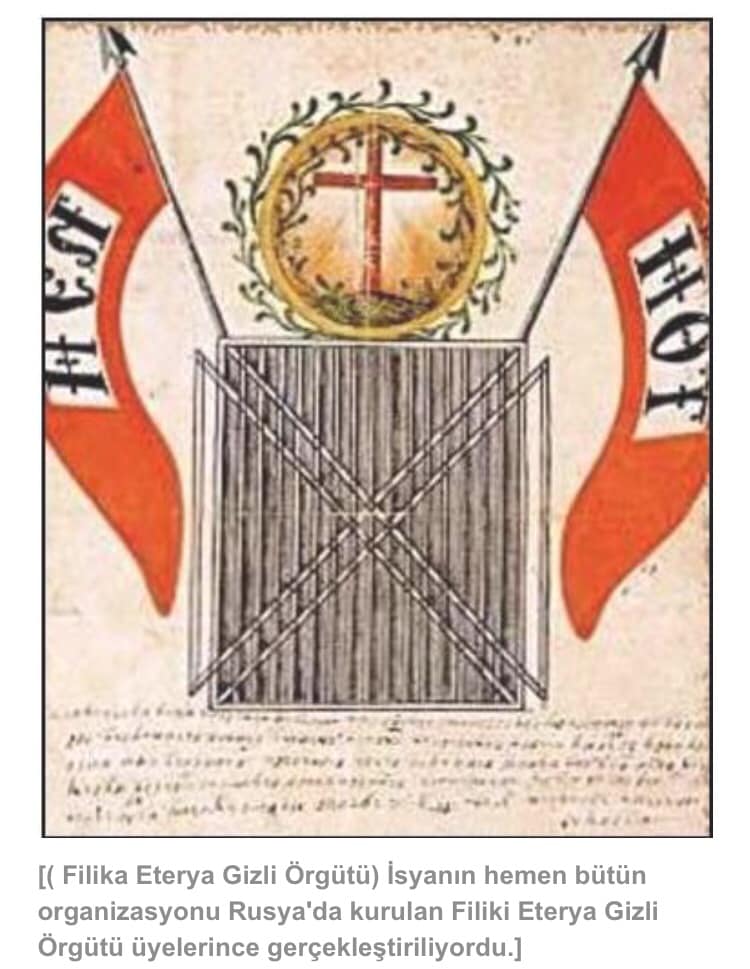
[( Filika Eterya Secret Organization) Almost all the organization of the rebellion was carried out by the members of the Filiki Eterya Secret Organization established in Russia.]
Source of current problems with Greece: 1821
Founded by foreign powers, Greece attempted to invade Anatolia during the First World War with the support and encouragement of foreign powers. Today, too, its mobility is limited without outside support. The important source of strength for Greek ambitions is undoubtedly the Hellenic friendship of the West.
The massacre against the Mora Turks, which was tried to be forgotten in the depths of the past, is a black mark that it wants to erase from the stage of history for Greece, which prides itself on being the “cradle of civilization”.
prof. Dr. Ali Fuat Örenç is of the opinion that the basis of today’s problems with Greece goes back 200 years:
“It would not be wrong to state that a significant part of the crises encountered in today’s Turkish-Greek relations are based on these dark periods of history and have had decisive effects on the shaping of the future relations of the two countries. For this reason, it does not seem possible to understand the debates in Turkish-Greek relations only by considering current legal, political, economic, military and strategic developments.”
Greek national anthem, part of a poem praising the massacre of the Mora Turks
The author of today’s national anthem of Greece is Dionysios Solomos. Solomos, in his poem written in 1823, tells about the revolt of the Greeks against the Ottomans.
The poem tries to legitimize the massacre of the Turks for freedom. In his poem, which forms the basis of today’s Greek anthem, Solomos defines the Turks as an unjust nation and argues that they should be killed.
In the poem of 158 stanzas, the massacre of the Turks in Tripolice, the center of the Peloponnese sanjak, is described as follows:
“…the deep ocean
That’s how I want you to hum
And drown in the wave
Every Turkish seed
Why did the battle slow down for a moment?
Why less blood? …”
SOURCE:prof. Dr. Ali Fuat Örenç, Mora Turks book
 AÇIK KAPI(OPEN DOOR))